
Blog

  • Emerging foot pain relief tech trends you should know in 2026

    Emerging foot pain relief tech trends you should know in 2026

    Redefining Pedal Health: The 2026 Tech Landscape

    Foot pain has long been dismissed as a trivial inconvenience, an inevitable toll of aging or an active lifestyle. Yet, the reality is far more complex, acting as a silent limiter on mobility and quality of life for millions. As we navigate through 2026, the approach to podiatric ailments is undergoing a seismic shift, moving away from reactive interventions toward a proactive, technology-driven ecosystem. The global market for podiatric services, valued at approximately $4.53 billion in 2023, is on a trajectory to reach $5.29 billion by 2030. This growth isn’t merely statistical; it represents a fundamental reimagining of how we treat the human foot, fueled by a rising prevalence of chronic conditions like diabetes and arthritis that necessitate advanced care. The days of generic shoe inserts and one-size-fits-all advice are rapidly fading, replaced by a precision era where data, imaging, and robotics converge to keep us moving.

    The Inner Workings of Next-Gen Diagnostics

    The cornerstone of this revolution lies in how we visualize and understand foot pathology. Traditional diagnostic methods, while effective for obvious fractures or deformities, often miss the subtle biomechanical failures that lead to chronic pain. Enter three-dimensional imaging systems and AI-driven diagnostics. These are not just upgrades; they are paradigm shifts. Current imaging technologies now capture volumetric data, allowing specialists to manipulate a digital replica of the foot in real-time, isolating stress points that are invisible on standard two-dimensional X-rays.
    Simultaneously, artificial intelligence is serving as a force multiplier for clinical judgment. By ingesting vast datasets of gait analysis and historical patient outcomes, AI algorithms can identify patterns of degradation far earlier than a human eye might detect. Imagine a scenario where the software flags a specific pronation anomaly not just as “flat feet,” but as a precursor to a specific type of plantar fasciitis, predicting the injury before the patient even feels the first twinge of discomfort. This predictive capability transforms the diagnostic timeline from a process of discovery to one of prevention.

    Precision Interventions: From Lasers to Robotics

    Once a diagnosis is secured, the intervention strategies available in 2026 are equally futuristic. The treatment of bunions, historically associated with painful recovery and significant downtime, has been completely retooled through minimally invasive techniques. Rather than large incisions and breaking bones, surgeons now utilize specialized instrumentation to correct deformities through tiny keyholes, drastically reducing tissue trauma. This shift is complemented by the rise of robotic-assisted procedures. These systems do not replace the surgeon but act as an ultra-steady hand, guiding osteotomies with sub-millimeter accuracy that human hands struggle to replicate consistently.
    Beyond the operating room, advanced laser therapies are offering non-invasive alternatives for inflammation and soft tissue repair. These high-intensity light beams penetrate deep into the tissue, stimulating cellular regeneration and reducing pain signals without the need for pharmaceuticals. Perhaps the most tangible advancement for the average consumer, however, is the maturation of 3D-printed orthotics. Unlike the foam impressions of the past, modern solutions are derived from laser scans and 3D modeling. The result is a device that matches the exact contour of the foot’s arch, correcting biomechanical imbalances with a level of customization that was previously impossible to mass-produce.

    Identifying the Hallmarks of Modern Care

    The defining characteristic of 2026’s podiatric landscape is not just the hardware, but the philosophy of care delivery. The model has shifted rigidly toward a patient-centric approach, where the technology serves to empower the individual rather than just the provider. This is most evident in the explosion of Remote Patient Monitoring (RPM). For chronic conditions such as diabetic foot ulcers, time is tissue. RPM systems utilize smart sensors and imaging to track wound healing and gait pressure from the patient’s home, transmitting data to clinicians in real-time. This constant feedback loop allows for immediate adjustments in treatment plans, preventing complications before they necessitate hospitalization.
    Furthermore, the siloed nature of medical treatment is dissolving. Modern podiatry relies heavily on cross-professional collaboration. A foot issue is rarely just a foot issue; it is often linked to vascular health, neurology, or rheumatology. Consequently, care protocols in 2026 are designed to be interdisciplinary, ensuring that a patient’s treatment for foot pain is synchronized with their management of diabetes or heart disease. This holistic view ensures that the “cure” for foot pain does not inadvertently exacerbate other systemic conditions.

    Real-World Integration and Patient Value

    For the individual sufferer, these trends translate to a significantly disrupted pain cycle. The integration of these technologies means faster recovery times, less invasive procedures, and longer-lasting relief. Consider the athlete who, through AI gait analysis, discovers a hip imbalance causing foot pain, corrects it with 3D-printed orthotics, and avoids surgery altogether. Or the elderly diabetic patient who, through remote monitoring, catches a pressure sore early and avoids a high-risk amputation. The value proposition is clear: technology is buying time and mobility.
    However, integration goes beyond clinical outcomes; it is reshaping the patient experience. The anxiety of the unknown is being replaced by the clarity of data. Patients can now see their progress quantified—improvements in range of motion, reductions in inflammation markers, and corrections in gait symmetry—visualized on apps connected to their treatment plans. This demystification of the healing process fosters a sense of control and engagement, which is psychosocially critical to long-term recovery.

    Navigating the Hype and Future Challenges

    Despite the dazzling array of gadgets and algorithms, the path forward is not without friction. The rapid proliferation of technology brings with it significant challenges regarding equitable access. As high-end treatments like robotic surgery and custom 3D printing become the standard of care, there is a tangible risk that only the well-insured or wealthy will benefit, creating a “mobility divide.” The industry is grappling with how to scale these innovations to make them affordable and accessible to underserved populations who often suffer the highest burden of chronic foot disease.
    Regulatory compliance also lags behind innovation. As AI tools become more autonomous in their diagnostic suggestions, the medical community faces complex ethical and legal questions regarding liability. Is the doctor or the algorithm responsible for a misdiagnosis? Moreover, the sheer pace of technological change demands a commitment to lifelong learning from practitioners. The podiatrist of 2026 must be part clinician, part data scientist, constantly updating their skill set to stay relevant. Navigating this landscape requires a critical eye; not every “smart” device offers genuine clinical value, and distinguishing between marketing hype and evidence-based efficacy remains a vital skill for both patients and providers.


  • Comparing vibrating and standard foam rollers for foot pain relief

    Comparing vibrating and standard foam rollers for foot pain relief

    Fundamental Concepts and Core Elements

    When we talk about managing foot pain, specifically looking at the tools available for self-myofascial release, it is essential to first establish a clear understanding of what we are actually dealing with. The conversation usually centers around two primary types of devices. The first is the standard foam roller, which has been a staple in physical therapy clinics and gyms for decades. The second is the more technologically advanced vibrating foam roller. At their core, both tools serve the same fundamental purpose. They are designed to apply pressure to the soft tissues of the body, but the way they go about it and the experience they provide are quite distinct.
    A standard foam roller is essentially a cylinder made of dense foam. It relies entirely on the user’s body weight and the force of gravity to create pressure against the muscle and fascia. It is a passive tool in the sense that it does not do anything on its own. In contrast, a vibrating foam roller houses a motor that oscillates the device at various frequencies and speeds. This adds an active element to the therapy. The vibration is not just a gimmick. It introduces a sensory input that travels through the tissue much faster than pressure alone. For foot pain, which often involves the delicate plantar fascia or the tight muscles of the calf, these elements become critical.
    The core elements we must consider here include the density of the foam, the surface texture, and when looking at the vibrating models, the amplitude and frequency of the vibration. Foot pain is complex. It can stem from plantar fasciitis, metatarsalgia, or simply general fatigue from being on one’s feet all day. Therefore, the tool chosen must be capable of addressing these specific tissues. A roller that is too soft might not provide enough shear force to make a difference in the connective tissue, while one that is too hard might cause bruising or excessive pain, particularly in the sensitive arch of the foot.

    Principles and Mechanisms of Action

    To really understand why one might choose a vibrating roller over a standard one, we have to dig a little deeper into the physiological mechanisms at play. The primary mechanism behind foam rolling is often referred to as myofascial release. When we apply pressure to a muscle, we are essentially trying to alter the mechanical properties of the muscle and the fascia surrounding it. The pressure creates a friction that generates heat and encourages blood flow to the area. This increased circulation helps to flush out metabolic waste products and brings in fresh, oxygenated blood, which is vital for tissue repair.
    However, the mechanism of action changes slightly when we introduce vibration. Vibration therapy operates on the principle of the Gate Control Theory of pain. This theory suggests that the spinal cord contains a neurological “gate” that either blocks pain signals or allows them to pass on to the brain. By introducing a non-painful sensory input, such as vibration, we can effectively close this gate. The vibration signals travel to the brain faster than the pain signals do, effectively overriding the sensation of pain. This is why a vibrating roller often feels more comfortable to use on sensitive areas like the feet.
    Furthermore, vibration stimulates the muscle spindles and Golgi tendon organs. These are sensory receptors within the muscle that detect changes in muscle length and tension. Stimulation of these receptors can cause a reflexive relaxation of the muscle. This is particularly useful for the calves and the intrinsic muscles of the foot, which often become hypertonic or tight in response to pain or injury. While a standard roller relies solely on mechanical pressure to break up adhesions, a vibrating roller uses a combination of mechanical pressure and neurological stimulation to achieve a similar, and often more profound, effect.

    Key Features and Evaluation Criteria

    When evaluating these tools for foot pain relief, there are several specific features that one should look at to make an informed decision. It is not simply a matter of picking the most expensive option. The features of the tool must match the specific needs of the user’s condition.
    First, we must consider the size and shape of the roller. For foot specific work, a full-length 36-inch roller is often unnecessary and cumbersome. A smaller, more compact roller, or even a foot-specific roller, is usually easier to maneuver. Standard rollers come in various densities, often color-coded. White rollers are generally soft, blue or green are medium, and black or high-density rollers are very firm. For the feet, which are sensitive, a medium density is often a good starting point. If the roller is too hard, the user may not be able to tolerate the pressure required to treat the plantar fascia effectively.
    For vibrating rollers, the key evaluation criteria shift towards the power source and the vibration settings. Battery life is a crucial factor. There is nothing more frustrating than a tool dying halfway through a recovery session. Additionally, the ability to adjust the frequency is important. Lower frequencies are often better for pain relief and relaxation, while higher frequencies tend to be more effective for increasing circulation and warming up the tissue. The noise level is another practical consideration. Some vibrating rollers can be quite loud, which might be a distraction if one is using them while watching television or in a quiet environment.
    Another critical feature is the surface texture. Smooth rollers provide a consistent, gliding pressure, whereas textured rollers with ridges or grids are designed to mimic the feeling of a massage therapist’s hands. These textures can be very effective for targeting specific trigger points in the arch of the foot. However, for someone with acute inflammation, a rough texture might be too aggressive. The decision between smooth and textured should be based on the user’s pain tolerance and the specific nature of their foot pain.

    Application Scenarios and Practical Value

    Understanding where and how to apply these tools is where the practical value lies. Both types of rollers have their place in a comprehensive recovery routine, but they shine in different scenarios.
    For a standard foam roller, the best application scenario is often for general maintenance and deep tissue work. If someone has been standing all day or has gone for a long run, using a standard roller to apply sustained pressure to the arch of the foot can help to realign the collagen fibers in the plantar fascia. It is a low-tech, reliable method that requires no charging and is highly durable. It is excellent for a pre-workout warm-up to get the blood moving. The value here is in its simplicity and effectiveness for broad tissue mobilization.
    On the other hand, the vibrating foam roller shows its strength in scenarios involving acute pain or sensitivity. For individuals suffering from conditions like plantar fasciitis, where even the slightest touch to the heel can be excruciating, the vibrating roller offers a distinct advantage. The vibration helps to desensitize the area, allowing the user to apply pressure without the immediate protective reflex that causes pain. This means they can actually treat the injured area rather than avoiding it due to discomfort.
    There is also a significant application value for older adults or those with limited mobility. Pushing hard enough against a standard roller to get deep into the calf muscles requires a certain amount of upper body strength and balance. A vibrating roller does much of the work for you. The oscillation penetrates deeper into the tissue with less physical effort from the user. This makes it a more accessible tool for a wider range of people. The vibration also promotes relaxation, which can be beneficial before bed to improve sleep quality, something that is often disrupted by chronic foot pain.

    Common Misconceptions and Advanced Approaches

    There are several misconceptions surrounding the use of foam rollers for foot pain that need to be addressed to ensure safe and effective usage. One of the most pervasive myths is that if it hurts, it is working. This “no pain, no gain” mentality can be dangerous, particularly when dealing with the small bones and delicate fascia of the foot. Applying excessive pressure to an inflamed area can actually increase inflammation and delay healing. While some discomfort is normal when rolling out tight tissue, sharp or stabbing pain is a sign that the technique needs to be adjusted.
    Another common misconception is that foam rolling can fix structural issues. If a foot pain is caused by a stress fracture, a bone spur, or severe flat feet requiring orthotics, a foam roller is not going to cure it. It is a symptom management tool, not a cure-all. It is important to have a proper diagnosis if the pain persists despite self-care. Relying solely on rolling can lead to a delay in getting appropriate medical treatment for more serious conditions.
    Moving towards an advanced approach, it is beneficial to combine foam rolling with other modalities for a synergistic effect. After using a vibrating roller to reduce pain sensitivity and increase blood flow, performing static stretching of the calf muscles and the plantar fascia can help to lengthen the tissues that have been warmed up. This combination of rolling and stretching is far more effective than either done in isolation.
    Furthermore, advanced users can integrate balance training. Once the foot has been rolled out and is less sensitive, standing on the foam roller while performing balance exercises can help to strengthen the intrinsic muscles of the foot and ankle. This strengthens the foot’s natural arch support system, addressing the root cause of many types of foot pain. This progression from pain relief to strength training represents a comprehensive approach to foot health that goes beyond simple symptom management.

  • Understanding the science behind TENS therapy for chronic foot pain

    Understanding the science behind TENS therapy for chronic foot pain

    Hey fam! Let’s be real for a sec. Foot pain is the absolute worst, right? 🤯 Like, you wake up, put your feet on the floor, and it’s just ouch city. Whether it’s from running all day, standing too much, or just life being hard, chronic foot pain can ruin your mood. I’ve been there. And I bet you have too. I recently started digging into something called TENS therapy. At first, it sounded super sci-fi and scary. Electricity? To stop pain? Really? But after doing a ton of research, I’m actually low-key obsessed. It’s not magic, but it’s pretty cool science. Let me break it down for you like we’re just chatting over coffee. ☕️
    【So, what is TENS anyway?】
    Okay, don’t let the big name scare you off. TENS stands for Transcutaneous Electrical Nerve Stimulation. That’s a mouthful, I know. Let’s just call it TENS. Basically, it’s a little device. It sends small electrical currents through your skin. The goal? To trick your nerves. It helps stop that pain signal from reaching your brain. It’s non-invasive. No needles. No scary surgeries. Just sticky pads and a machine. It’s been around for like 50 years. So it’s not some newfangled gimmick. It’s a legit therapy. It’s used for all kinds of pain. But today, we are talking about our feet. 👣
    【How does it actually work?】
    This is the nerdy part. But I promise to keep it simple. Our nerves are like little wires. When you hurt your foot, those wires send a “HELP! WE ARE HURTING!” message to your brain. TENS jumps in and interrupts that call. It sends its own signal. Think of it like this. You’re trying to listen to a song. But someone turns up the static. The song gets drowned out. That’s basically what TENS does to pain. It uses something called the Gate Control Theory. It closes the “gate” on pain signals. It’s pretty smart when you think about it. 🧠
    【The two modes you need to know】
    So here is the tea. Not all TENS is the same. There are two main ways to use it. And they do different things. You gotta know the difference.
    1️⃣ High Frequency mode
    This is the common one. We are talking over 50 Hz here. It feels like a buzzing or tingling sensation. Like when your foot falls asleep, but not as intense. This mode is great for fast relief. It doesn’t make your muscles move. It just distracts the nerves. It blocks the pain messages right at the spinal cord. If you have sharp, acute foot pain, this is your go-to. It’s like a shield for your nerves. 🛡️
    2️⃣ Low Frequency mode
    This one is different. We’re talking under 10 Hz. It feels stronger. It actually makes your muscles twitch. Like a little workout while you sit on the couch. This mode is for slower, deeper relief. It triggers your body to release endorphins. You know endorphins, right? They are nature’s painkillers. Like a happy chemical bath for your body. It takes longer to feel this one. But the relief lasts longer too. It’s perfect for that deep, aching chronic pain. 💪
    【The device itself is super cute】
    I love how portable these things are. The TENS unit is usually tiny. It’s battery-powered. Like, smaller than your phone. You can slip it into your pocket. Or clip it onto your belt. Nobody even has to know you’re using it. It comes with electrode pads. You stick those on your foot or ankle. Wires connect the pads to the device. Super simple setup. You are in total control. You can turn knobs or press buttons. Change the intensity. Change the speed. Make it yours. It’s like having a physical therapist in your pocket. 🎒
    【Is it safe? I was worried too】
    I know, I know. Electricity on your body sounds risky. But it’s actually super safe. TENS has a high safety profile. Side effects are super rare. Unlike pills, you can’t really overdose on it. If it feels too strong, you just turn it down. Easy. The main thing is just following the instructions. Don’t put the pads on your eyes or throat. Obviously. And if you have a pacemaker, talk to your doctor first. But for most people? It’s totally fine. It’s gentle. It’s tolerable. It doesn’t hurt. It just feels… weird. Ticklish almost. ✅
    【Why it’s great for chronic foot pain】
    Let’s talk about why we are here. Your feet. They take a beating every day. Conditions like plantar fasciitis are a nightmare. That heel pain in the morning? Ugh. TENS helps manage that without drugs. You can use it while you watch TV. Or while you work. It helps reduce the sensation of pain. It doesn’t necessarily “fix” the injury. Like, it won’t heal a broken bone. But it manages the symptoms so you can function. It lets you walk easier. It helps you sleep better. Living with less pain is a huge win. It gives you your life back a little bit. 🌟
    【Common myths debunked】
    I see so much wrong info online. Let’s clear the air.
    ❌ “It shocks you.”
    Nope! It doesn’t hurt. It’s a stimulation, not a shock. It feels like buzzing.
    ❌ “It builds muscle.”
    Not really. The low mode makes muscles twitch a bit. But it’s not for bodybuilding. It’s for pain.
    ❌ “It cures everything.”
    It’s a management tool. It helps you deal with pain. It’s not a magic cure-all. Be realistic.
    Don’t fall for the hype. Use it for what it is. A great pain management tool. 🚫
    【How to use it like a pro】
    Okay, here is the quick and dirty guide.

    1. Clean your skin first. Oils can stop the pads from sticking.
    2. Put the pads around the painful area. Not right on a bone, but on the muscle.
    3. Turn it on low. Like, really low.
    4. Slowly turn it up until you feel a strong tingling.
    5. Set a timer. 15 to 30 minutes is usually enough.
    6. Relax. Read a book. Scroll TikTok.
    7. When you’re done, take the pads off carefully.
      Pro tip: Put a few drops of water on the pads before storing them. It keeps them sticky longer. You’re welcome. 💡
      【My honest take】
      Look, I’m not a doctor. But I’m someone who hates pain. And I love finding hacks to feel better. TENS isn’t magic. But the science is solid. It’s been studied for decades. It makes sense biologically. Blocking pain signals. Releasing endorphins. It’s a smart way to use technology. If you are dealing with chronic foot pain, it might be worth a shot. It’s way better than popping painkillers every day. It gives you control. And honestly? Feeling a little buzzing beat is kind of therapeutic. 🤷‍♀️
      【Let’s chat!】
      Have you guys ever tried TENS therapy? I’m dying to know. Did it work for your foot pain? Or was it just a weird vibe? Drop a comment below and let me know your experience. Or if you have questions about the settings, ask away! I’m happy to share what I know. Don’t forget to save this post for later. You never know when you’ll need a pain hack! Stay pain-free, friends! ✨👟
  • Trigger point therapy guide for office workers with foot strain

    Trigger point therapy guide for office workers with foot strain

    Unraveling the Knots: Defining Foot Strain and Trigger Points

    The modern office environment, characterized by its climate-controlled stillness and ergonomic chairs, presents a paradoxical threat to the human foot. While we might assume the danger lies in the marathon runner’s stride, it is often the sedentary marathon—hours of immobility punctuated by short, stiff walks—that cultivates a specific kind of misery. This misery frequently manifests as foot strain, a dull ache or sharp tension that undermines the foundation of our physical structure. However, the pain felt in the sole or the arch is frequently not the origin of the problem, but rather the symptom of a dysfunction known as myofascial trigger points.
    To understand this, one must look beyond the simple anatomy of bones and tendons. We must consider the fascia—the pervasive, thin layer of connective tissue that wraps around and interpenetrates every muscle, bone, nerve, and organ. When office workers remain in a fixed posture, such as sitting with feet plantar-flexed (pointed down) or dangling, the muscle fibers and their surrounding fascial sheaths can develop “taut bands.” Within these bands, hyperirritable spots called trigger points emerge. These are not merely sore muscles; they are distinct, palpable nodules that exist in a state of constant metabolic crisis. Unlike standard muscle soreness which is diffuse, a trigger point is a focal point of chaos. When compressed, these nodules produce a distinctive “twitch response” in the muscle and, crucially, can refer pain to areas seemingly distant from the source. For the desk-bound individual, the foot strain they feel after lunch might actually be a trigger point in the calf referring pain downward, or a latent point in the intrinsic foot muscles activated by the sudden transition from stillness to motion.

    The Mechanics of Misery: How Desk Life Creates Energy Crisis

    Why does sitting still cause such active turmoil? The prevailing theory, often misunderstood as simple “muscle tension,” is actually rooted in a localized energy crisis at the cellular level. In the context of an office worker, the mechanism is insidious. It begins with the motor endplate—the junction where the nerve meets the muscle fiber. Under normal circumstances, this chemical exchange is tightly regulated. However, when a muscle is held in a shortened or static position for hours—a common occurrence for feet tucked under a chair—the synaptic machinery can malfunction.
    The current physiological hypothesis suggests that these motor endplates begin to release excessive amounts of acetylcholine, the neurotransmitter responsible for signaling muscle contraction. This flood of chemicals causes a sustained contraction in a specific segment of the muscle fiber. This microscopic contraction effectively squeezes the local capillaries, shutting off the blood supply. Without blood flow, the area is starved of oxygen and glucose, while metabolic waste products like lactate and inflammatory cytokines accumulate. It is a vicious cycle: the lack of energy prevents the muscle from relaxing, and the constant contraction prevents the restoration of energy flow.
    For the foot, this is compounded by the dynamics of office footwear and flooring. Hard surfaces, combined with shoes that elevate the heel or constrict the toes, alter the biomechanics of walking. Even the short walk to the breakroom can trigger these hypersensitive bundles. The muscle, already primed by the sedentary ischemia (lack of blood flow), reacts to the load with an exaggerated protective response. This phenomenon, known as “repetitive muscle flexion” in a compromised state, ensures that the trigger point not only forms but solidifies. The result is a foot that feels tired, heavy, or painful, not because it has walked too far, but because its internal communication system is jammed in a permanent “on” signal.

    Mapping the Terrain: Identifying Key Trigger Zones

    Navigating the landscape of foot pain requires a shift in perspective. One must abandon the notion that pain equals damage at the site of sensation. For the office worker, the primary culprits are often the secondary muscles that support the foot’s architecture. The most common region for latent trigger points referring pain to the sole is the Gastrocnemius and Soleus muscles—the calf complex. A trigger point in the upper calf, for instance, often refers a spasm-like pain down to the arch or the heel, mimicking the symptoms of plantar fasciitis without the actual tissue inflammation of the fascia.
    Furthermore, the intrinsic muscles of the foot—the small, intricate muscles lying between the metatarsal bones—are fertile ground for these points due to the constant micro-adjustments required to maintain balance while sitting or standing. Identifying these points involves a systematic search. A latent trigger point may not hurt until it is pressed; an active one sends a dull ache or sharp twinge even at rest. To locate them, one can use a simple exploratory technique: applying firm, focused pressure with a thumb or a blunt object along the muscle belly.
    The sensation is distinct. You are not looking for the general soreness of a bruise; you are hunting for a “jump sign”—a physiological flinch or a sharp recognition that “that’s the spot.” In the foot, common referral patterns include pain in the heel (often from the Soleus), pain in the webbing of the toes (from the Flexor Digitorum Brevis), and a generalized ache across the arch. Recognizing these patterns is the first step in breaking the cycle. It transforms the pain from a mysterious, global affliction into a specific, localized mechanical failure that can be addressed. The office worker must learn to distinguish between the diffuse fatigue of a long day and the specific, radiating signature of a trigger point.

    The Protocol: Practical Relief Strategies at Your Desk

    Armed with the knowledge of where the pain originates, the solution lies in disrupting the contracted tissue and restoring blood flow. The goal of trigger point therapy is not merely to relax the muscle, but to mechanically force the sarcomeres to release their grip. For the office worker, this does not require expensive equipment; it requires consistency and a specific approach to pressure.
    The most effective tool for the foot is often a simple ball—a tennis ball, lacrosse ball, or specialized fascia ball. While seated at your desk, you can place the ball on the floor and roll your foot over it. However, mindless rolling is insufficient. One must locate the point of maximum tenderness—the trigger point—and sustain static pressure on it for 30 to 90 seconds. This ischemic pressure temporarily cuts off blood flow completely, and upon release, creates a “rush” of blood that flushes out the inflammatory byproducts and resets the motor endplate.
    For the calf muscles, which heavily influence foot strain, a different approach is needed. Using a foam roller or the edge of a sturdy chair, apply broad pressure to the calf muscle. When you find a tender spot, stop rolling and hold. Flex and point your foot repeatedly while maintaining pressure to “strip” the muscle. This active engagement helps to separate the muscle fibers that have adhered together.
    Additionally, manual stretching is vital, but only after the trigger point has been deactivated. Stretching a muscle with active trigger points can often worsen the condition by tearing the already taut fibers. The sequence is critical: release first, stretch second. Begin by massaging the arch of the foot with your thumbs, digging deep into the medial arch to search for knots. Follow this with a calf stretch against a wall, holding for at least 30 seconds to ensure the fascia, which is slower to react than muscle, has time to elongate. Integrating these micro-sessions into the workday—five minutes for every hour of sitting—can prevent the metabolic crisis from taking root.

    Beyond the Quick Fix: Long-Term Management and Avoiding Pitfalls

    While the immediate relief of releasing a trigger point can be profound, relying solely on manual intervention is a reactive game. To truly banish foot strain, one must address the environmental factors that incubate these points. A common misconception is that trigger point therapy must be agonizing to be effective. This is false; excessive pressure can activate the body’s defense mechanisms, causing the muscle to tighten further in protection. The pressure should be “hurts so good,” a 7 out of 10 on the pain scale, never excruciating.
    Another critical error is neglecting the postural habits of the upper body. Foot pain is frequently linked to the position of the hips and lower back. Sitting with a wallet in the back pocket or crossing the legs creates torsion in the lumbar spine, which alters nerve signals and tension patterns all the way down to the feet. Addressing foot strain, therefore, requires a holistic view of the workspace. Adjusting the chair height so that the feet rest flat on the floor, ensuring the hips are higher than the knees, and taking frequent “movement breaks” to reverse the effects of gravity are all essential components of the cure.
    Finally, hydration plays a pivotal role. The fascia is a water-rich structure; dehydration makes it sticky and less pliable, increasing the likelihood of adhesions and trigger points. The office environment, often dry and air-conditioned, accelerates fluid loss. By increasing water intake and managing electrolyte balance, the tissues remain more resilient to the stresses of immobility. The journey to pain-free feet is not about finding a single silver bullet, but about disrupting the feedback loop of stress, tension, and ischemia that defines the modern office experience. It is a return to movement, a reclaiming of the body’s innate capacity to heal, one pressured knot at a time.

  • Quick fixes for standing all day foot pain

    Quick fixes for standing all day foot pain

    Defining the Nature of Standing-Induced Foot Pain

    (I) Conceptualizing the Problem

    When we discuss the physical burden of remaining upright for extended periods, we are essentially describing a specific type of musculoskeletal stress that arises from static posture. This is not merely a sensation of general tiredness but rather a distinct condition where the structural support system of the feet undergoes continuous pressure. The core issue lies in the prolonged duration of the activity without adequate respite for the complex network of bones, ligaments, and muscles that comprise the lower extremities. It is a phenomenon that transcends simple fatigue and enters the realm of potential chronic discomfort if left unaddressed.

    (II) Core Elements of the Condition

    To fully grasp the scope of this issue, one must examine the fundamental components involved. The primary element is the gravitational force exerted on the plantar aspect of the foot over many hours. This constant pressure impedes normal fluid return and compresses the soft tissues. Another critical element is the lack of dynamic movement. When standing still, the venous pump mechanism, which usually relies on muscle contractions to circulate blood, operates less efficiently. These elements combine to create the specific type of soreness and pain that workers report after long shifts.

    1. Structural Stress
      The architectural design of the human foot is meant for mobility. When forced into a static position, the arches bear a sustained load that can lead to strain and inflammation.
    2. Fatigue Factors
      Beyond the mechanical stress, there is the metabolic fatigue of the muscles. The intrinsic muscles of the foot work tirelessly to maintain balance, leading to a buildup of metabolic waste products that contribute to the sensation of pain.

    Analyzing the Mechanisms of Pain and Relief

    (I) Understanding Circulatory Responses

    A significant portion of the discomfort experienced after standing all day can be attributed to circulatory stagnation. The blood tends to pool in the lower extremities due to gravity. Therefore, any intervention that aims to mitigate this pain must address the flow of blood. It is observed that increasing circulation is paramount to reducing pain [1]. By enhancing the blood flow to the affected areas, the body is better able to clear out metabolites and supply oxygen to fatigued tissues, which is essential for recovery.

    (II) Therapeutic Interventions

    Several mechanisms can be employed to interrupt the pain cycle. These are not merely anecdotal fixes but are grounded in basic physiological principles regarding tissue healing and nerve response. The application of external stimuli, such as temperature or physical touch, can alter the perception of pain and the underlying tissue condition.

    1. Manual Stimulation
      The act of rubbing sore feet is a direct method to influence the local physiology. It is noted that rubbing the feet can help increase blood flow and reduce pain [1]. This mechanical action serves to warm the tissues and stimulates nerve endings in a way that can override pain signals.
    2. Thermal Regulation
      The use of heat and cold is another cornerstone of symptomatic relief. Both heat and cold modalities can help reduce foot pain after standing all day [1]. While heat typically serves to relax tense muscles and improve circulation, cold therapy can act to numb acute pain and reduce inflammation. The choice between them often depends on the specific nature of the discomfort, but both are valid tools for providing quick relief.

    Identifying High-Risk Professions and Scenarios

    (I) Occupational Categories

    It is important to recognize that this condition does not manifest randomly. There is a strong correlation between specific occupational categories and the incidence of standing-related foot pain. Certain professions demand an upright posture as a fundamental requirement of the job, making the workers in these fields particularly susceptible to the condition. Identifying these groups helps in understanding the prevalence of the issue and targeting interventions effectively.

    (II) Common Environments

    The environments where these issues arise are typically characterized by hard surfaces and rigid schedules. Workers are often unable to sit or take breaks to offload their feet. The risk context is broad, encompassing various sectors of the economy where labor is physically demanding in terms of posture rather than heavy lifting.

    1. Healthcare Settings
      Professionals in the healthcare industry, such as nurses and support staff, are among the most frequently affected. The nature of patient care requires constant movement and standing, often for twelve hours or more at a time [1].
    2. Industrial and Retail Spaces
      Beyond healthcare, the risk extends to those in construction and factory work [1]. Similarly, retail sales associates and salon workers spend the majority of their shifts on their feet, often on concrete or tile floors that exacerbate the stress on the lower limbs [1].

    Applying Relief and Prevention Strategies

    (I) Immediate Remedial Actions

    For those currently experiencing the effects of a long shift, immediate remedial actions are necessary to restore comfort. These strategies focus on reversing the physiological stress accumulated during the day. The goal is to transition the body from a state of work-induced stress to a state of rest and recovery as efficiently as possible.

    (II) Long-term Prevention

    While immediate relief is crucial, a more sustainable approach involves preventing the pain before it starts. This requires a proactive stance, utilizing tools and techniques to prepare the feet for the demands of the job. Prevention is generally more effective than treatment, as it addresses the root causes of the strain rather than just the symptoms.

    1. Stretching Protocols
      Engaging in regular stretching is a highly effective preventative measure. Stretching helps prevent foot pain from standing all day [1]. By maintaining flexibility in the calf muscles and the plantar fascia, the mechanical load on the foot is distributed more evenly, reducing the peak stress points that lead to pain.
    2. Orthotic Support
      The use of supportive devices is another key strategy. Using orthotics can help prevent foot pain from standing all day [1]. These devices provide custom or semi-custom support to the arches of the foot, correcting biomechanical imbalances and cushioning the impact against hard surfaces.

    Navigating Limitations in Work Environments

    (I) Adapting to Fixed Conditions

    A common source of frustration for many workers is the inability to alter their work environment. Changing jobs or modifying the physical workspace to include more seating is often not an option. Therefore, the management of foot pain must be approached from the perspective of what the individual can control outside of work hours. The reality is that while the work situation may be static, the body’s response to it can be dynamic and manageable.

    (II) Home-Based Management

    Even when the professional context cannot be changed, there are viable pathways to relief that can be implemented at home. It is generally understood that even if one cannot change the work situation, there are still ways to help relieve foot pain at home [1]. This empowers the individual to take ownership of their recovery, utilizing the home environment as a place for restorative care.

    1. Feasibility of Treatments
      The treatments discussed, such as rubbing, thermal therapy, and stretching, are all highly accessible and do not require expensive equipment or significant time investments. This makes them practical solutions for people who are already exhausted from their workday.
    2. Consistency in Care
      The key to success in these scenarios is consistency. Applying these remedies regularly after shifts can prevent acute pain from becoming a chronic condition. It is about creating a routine that counteracts the daily wear and tear on the feet.
  • Best recovery tools for foot pain in 2026

    Best recovery tools for foot pain in 2026

    Understanding the Landscape of Foot Recovery Interventions

    When we look at the current state of foot care in early 2026, it becomes increasingly clear that managing discomfort goes far beyond simple rest or ice. The approach to alleviating foot pain has evolved into a sophisticated ecosystem of tools and methodologies designed to address the root causes of biomechanical dysfunction. To truly grasp how to navigate the available options, one must first understand the fundamental categories of intervention that dominate the landscape today. These tools are generally categorized into passive support systems, such as orthotics, and active rehabilitation strategies, which include specific training regimens and footwear choices. The distinction between these two approaches is critical because they serve different, yet complementary, roles in the recovery process. Passive tools often aim to offload stress and correct structural alignment immediately, while active tools focus on long-term strengthening and neuromuscular re-education. By comprehending the scope of these interventions, individuals can make more informed decisions about which tools might best suit their specific physiological needs rather than relying on a one-size-fits-all solution.

    Deep Dive into Orthotic Interventions

    Orthotic therapy remains one of the most widely utilized methods for addressing foot and ankle pathologies, and for good reason. As we examine the clinical utility of these devices, it is important to recognize that they are fundamentally defined as a non-surgical and conservative method of treatment [1]. This distinction is vital for patients who wish to avoid invasive procedures. The primary utility of orthotics lies in their ability to manage and treat a variety of conditions affecting the foot and ankle without the need for surgical intervention. However, their application is not merely reactive. A significant portion of their value comes from their preventive capabilities. By altering the way forces are transmitted through the foot, orthotics can prevent the progression of existing deformities or the development of new pathologies.
    The mechanism by which these devices achieve such outcomes is multifaceted. One of the core functions is the reduction of pressure on specific affected areas. When a person suffers from plantar fasciitis or metatarsalgia, for instance, high-pressure zones under the foot can exacerbate inflammation and pain. Orthotics redistribute these forces, providing a cushioning effect that alleviates the stress on vulnerable tissues. Beyond mere pressure redistribution, these tools play a pivotal role in promoting functional rehabilitation. By stabilizing the foot and ensuring proper alignment, they create an environment where healing can occur more efficiently. They essentially guide the foot into a more optimal position during the gait cycle, which facilitates better movement patterns and supports the overall recovery of function [1]. This dual capacity to both mitigate immediate symptoms and foster long-term healing makes them a cornerstone of conservative foot care.

    The Role of Foot Core Training and Minimalist Footwear

    While orthotics provide external support, a growing body of evidence suggests that internal strengthening is equally, if not more, important for long-term foot health. This brings us to the concept of the “foot core,” a paradigm shift that views the intrinsic muscles of the foot much like the core muscles of the trunk. Foot core training, often coupled with the use of minimalist footwear, has gained significant traction as a recovery tool. The primary applicability of this approach lies in its ability to increase the intrinsic strength of the foot. Unlike traditional supportive shoes that may restrict natural movement, minimalist footwear allows the foot to move more naturally, engaging the small stabilizing muscles that often atrophy in cushioned shoes.
    The impact of these interventions extends across several dimensions. First and foremost is the effect on muscle morphology. Research indicates that targeted exercises can lead to hypertrophy, or an increase in the size of the intrinsic foot muscles. Larger, stronger muscles are better equipped to handle the loads placed upon them during daily activities. Secondly, we observe marked improvements in strength performance. As these muscles develop, the foot becomes more rigid when needed for push-off and more flexible when adapting to uneven terrain. Finally, and perhaps most importantly, these tools induce changes in biomechanics [2]. During dynamic tasks, such as walking or running, a stronger foot core alters the biomechanical profile of the lower limb. This can lead to a more efficient gait, reduced energy expenditure, and a lower risk of injury. These interventions are particularly effective for inducing biomechanical changes during dynamic tasks, making them essential for active individuals looking to return to sport or high-level activity.

    Evaluating the Criteria for Effective Recovery Tools

    With a plethora of gadgets and devices flooding the market in 2026, establishing a set of criteria for judging their efficacy is necessary. Not all tools are created equal, and understanding what makes a recovery tool effective can save consumers time and money. For orthotic devices, the key criterion is customization and the specific pathology it addresses. An effective orthotic must not only fit the contour of the foot but also address the specific biomechanical fault, whether it is excessive pronation or supination. The material properties also matter, as they determine the balance between cushioning and rigidity.
    When evaluating foot core training tools, such as resistance bands or specific exercise platforms, the focus shifts to progressive overload and functional specificity. The tool must allow for an increase in difficulty as strength improves to ensure continued adaptation. For minimalist footwear, the criteria involve a gradual transition protocol and the geometry of the shoe. A shoe that is too minimal too quickly can lead to injury, so the best tools on the market often come with structured guidelines for transitioning from traditional shoes. Furthermore, the shoe should have a wide toe box to allow for natural toe splay and a zero-drop heel to promote a more natural posture. By applying these rigorous standards, one can filter out ineffective gadgets and focus on tools that offer genuine therapeutic value.

    Practical Utility and Value in Daily Life

    The theoretical benefits of these recovery tools are well-documented, but their true value is realized in their practical application within daily life. For the office worker who spends hours standing, orthotic interventions can be the difference between a day characterized by pain and one of comfort. The减压 (pressure relief) provided by a well-made insole allows for prolonged standing without the inflammatory backlash that might otherwise occur. Similarly, for the recreational runner, integrating foot core exercises into a warm-up routine can enhance running economy. The value here is not just in pain reduction, but in performance enhancement. It is about enabling a lifestyle that is not limited by foot discomfort.
    Moreover, the use of minimalist footwear for casual walking around the home or neighborhood can serve as a form of continuous training. Every step taken in these shoes acts as a micro-workout for the foot muscles, contributing to cumulative strength gains over time. This is where the practical value intersects with convenience. The most effective recovery tools are those that seamlessly integrate into a person’s existing routine rather than requiring dedicated time slots that are hard to maintain. Whether it is the immediate relief offered by an orthotic during a flare-up or the long-term structural integrity built through foot core training, the utility of these tools is measured by their ability to restore and maintain an individual’s quality of life.

    Navigating Common Misconceptions in Foot Recovery

    Despite the wealth of information available, several misconceptions persist that can hinder recovery. A common fallacy is the belief that orthotics are a “cure” that one must wear forever. While they are indispensable for the treatment and prevention of conditions [1], they should ideally be viewed as a temporary assistive device while the foot is strengthened. Over-reliance on external support can potentially lead to weakness in the intrinsic muscles if not paired with active rehabilitation. This underscores the importance of combining the passive support of orthotics with the active engagement of foot core training.
    Another area of confusion involves the use of minimalist footwear. Many assume that simply switching to barefoot-style shoes will automatically fix their foot pain. However, the literature suggests that these tools are most effective when used to induce biomechanical changes and increase muscle strength [2]. Without the requisite muscular foundation, abruptly switching to minimalist shoes can exacerbate problems. Therefore, the “best” tool is not a single product but a strategic combination of interventions. It involves using orthotics to manage pain and create a healing environment while simultaneously engaging in foot core training to address the underlying weakness. Recognizing that recovery is a process requiring a multifaceted approach is the key to navigating the landscape of foot pain relief tools in 2026.

  • Does TENS therapy work for foot pain

    Does TENS therapy work for foot pain

    Understanding the Basics of TENS Therapy

    When we talk about managing foot pain, especially the kind that just doesn’t seem to go away with rest, the conversation often turns toward modern gadgetry and physical therapy tools. One term that pops up frequently is TENS, which stands for Transcutaneous Electrical Nerve Stimulation. It sounds technical and perhaps a bit intimidating at first glance, but when you break it down, it is actually a very straightforward concept. Essentially, TENS is a method used to relieve pain that is non-invasive, meaning it does not require breaking the skin or any surgical procedures. It is generally considered to be quite affordable compared to other medical interventions, and perhaps one of its most appealing features is that it is a self-operable technology. You can manage the treatment yourself in the comfort of your own home without needing a medical professional to be standing right next to you.
    It is important to categorize this correctly within the medical landscape. TENS falls squarely under the umbrella of non-pharmacological interventions. In simpler terms, this means it treats pain without the use of drugs or medications. For patients who are looking to avoid the side effects that often come with painkillers, or those who simply cannot take certain medications due to other health issues, this distinction is vital. The therapy primarily aims to address both acute and chronic pain conditions. Whether you have twisted an ankle recently or have been suffering from persistent nerve discomfort in your feet for years, TENS is often presented as a viable option to consider.

    The Science Behind the Mechanism

    To really understand why this therapy is used, we have to look under the hood at the basic principles and mechanisms of action. The human body is a complex electrical system, and nerves communicate with the brain through electrical signals. When you feel pain, it is because specific nerves are sending a “danger” signal to your brain. TENS units work by generating their own electrical impulses. These impulses travel through electrodes placed on the skin, specifically targeting the nerves that are transmitting the pain signals.
    There are a couple of leading theories on how this actually stops the pain. One widely accepted explanation is the Gate Control Theory of pain. Imagine the spinal cord has a “gate” that allows pain signals to pass through to the brain. The electrical stimulation from the TENS unit is thought to essentially close this gate. By stimulating non-pain-carrying sensory fibers, the device blocks the slower pain-carrying fibers from sending their message to the brain. It is essentially a game of neurological traffic control where the TENS signal gets priority and the pain signal gets stuck at the gate.
    Another mechanism involves the body’s own natural painkillers. It is believed that certain frequencies of electrical stimulation can encourage the body to release endorphins. These are chemicals produced naturally by the body that act similarly to opioid pain relievers but without the synthetic additives. When using lower frequency settings, often described as a pulsing sensation rather than a steady buzz, the body may release these endorphins to provide a more lasting relief that continues even after the device is turned off. This dual approach—blocking pain signals and promoting natural chemical relief—is what makes the mechanism so interesting to researchers and clinicians alike.

    Identifying Key Features and Safety Standards

    When evaluating any medical device, safety is always the primary concern, and this is an area where TENS units generally shine. One of the most significant advantages of this technology is that it has very few side effects. Unlike oral medications that can affect the stomach, liver, or kidneys, TENS therapy is localized. The most common side effect, if any occurs at all, is usually mild skin irritation where the electrode pads are placed. This is typically due to the adhesive on the pads or the sensitivity of the skin to the electrical current, and it often resolves quickly once the pads are removed.
    Another critical feature to consider is the safety profile regarding dosage. There is virtually no risk of overdose with TENS therapy. You cannot take “too much” electricity in the same way you can take too many pills. If the intensity is set too high, it will simply feel uncomfortable, causing the user to turn it down immediately. This inherent safety limit makes it a very low-risk option for managing pain at home.
    Furthermore, the control of the treatment is largely in the hands of the patient. This concept, often referred to as self-titration, means that the individual can adjust the treatment dose according to their specific needs at any given moment. If the pain is flaring up, the intensity or duration can be increased. If it is a mild day, the settings can be reduced. This autonomy allows for a personalized pain management strategy that rigid medication schedules cannot always offer. It empowers the patient to listen to their body and respond accordingly, which is a crucial aspect of chronic pain management.

    Practical Applications for Foot Pain

    Moving from the general theory to the specific application, let us look at how this applies to the feet. The feet are a complex structure of bones, muscles, and nerves, and they bear the weight of the entire body every day. This makes them particularly susceptible to various types of pain, from plantar fasciitis to metatarsalgia and general neuropathy. For nerve-related foot pain, which can feel like burning, tingling, or shooting sensations, TENS can be particularly effective. By targeting the specific nerves in the foot or ankle, the device can help disrupt those constant, distracting signals that make walking or even resting difficult.
    For muscle-related pain in the feet, such as arch cramps or soreness from overuse, the therapy can help reduce muscle tension and promote relaxation. While TENS is primarily for nerve stimulation, the rhythmic pulsing can have a secondary effect on tight muscles, helping to decrease spasms. The application involves placing small, sticky electrode pads around the area of pain. For instance, if the pain is in the heel, one pad might be placed on the bottom of the heel and another on the top of the foot or near the ankle to create a circuit through the painful area.
    The value of this therapy lies in its ability to provide relief without sedation. Unlike strong painkillers that might make a person drowsy or foggy, TENS allows individuals to remain alert and active. This is particularly important for foot pain, as mobility is often compromised. By managing the pain effectively, patients can maintain a more active lifestyle, engage in physical therapy exercises with less discomfort, and generally improve their quality of life without the “zombie-like” side effects of pharmaceuticals.

    Historical Context and Common Misconceptions

    It is easy to assume that TENS is a brand new technology given the sleek design of modern units, but the research behind it is actually quite extensive. The first clinical studies regarding TENS were published over five decades ago. This means that for more than half a century, scientists and doctors have been looking into how electricity can interact with our nervous system to alleviate suffering. Over the years, the technology has evolved from large, cumbersome machines found only in clinics to portable, battery-operated devices that fit in a pocket.
    Despite its long history, there are still some misconceptions about what TENS can and cannot do. One common misunderstanding is that TENS is a “cure” for the underlying condition. It is important to clarify that TENS is a symptomatic treatment. It manages the pain, but it does not fix the structural issue causing the pain, such as a bone spur or a damaged nerve. Think of it as a tool to help you function better while your body heals or while you manage a chronic condition.
    Another point of confusion is the difference between TENS and EMS (Electrical Muscle Stimulation). While they both use electricity and look similar, EMS is designed to contract muscles to build strength or prevent atrophy, whereas TENS is strictly for pain relief. Using the wrong device for the wrong goal can lead to disappointment. Understanding the history and the specific intent of the technology helps users set realistic expectations. It is a battle-tested, safe, and effective method for pain management, but it works best as part of a broader care plan rather than a standalone magic bullet.

  • Foot massage guns versus foam rollers

    Foot massage guns versus foam rollers

    How They Apply Pressure

    The fundamental difference lies in how force is generated. With a foam roller, you are the engine. You lie on the floor, position your foot over the cylinder, and press down. The pressure comes entirely from your own body weight against gravity. It is static, broad, and often intense because you can’t easily modulate the force once you commit to the position.
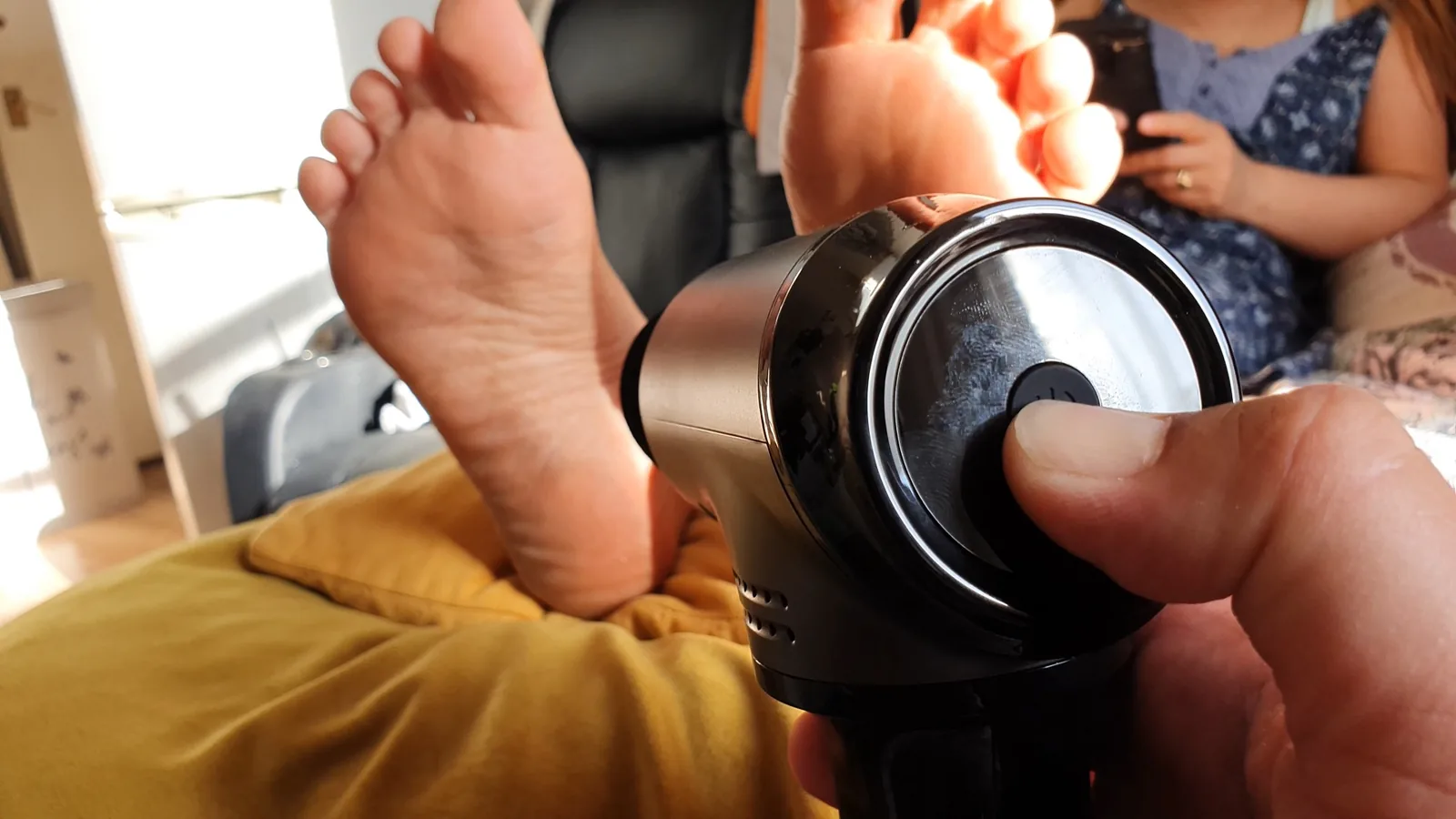
    A massage gun works differently. It is a tool of percussion. You hold the device against the arch of your foot, and a motor drives a head back and forth rapidly. The force comes from the mechanical impact, not your body weight. You don’t have to balance or contort your body to dig into a muscle knot. You just hold the machine there and let it hammer away. This distinction changes everything about the experience.

    The Foam Roller Reality

    Using a foam roller on your feet feels like a blunt instrument. It is designed for large muscle groups like the quads or lats, where the surface area is wide and flat. The foot is narrow, bony, and curved. When you try to roll a foot over a standard six-inch roller, it feels unstable.
    You have to tilt your ankle at awkward angles to hit the plantar fascia. It is easy to roll over the ankle bone or the Achilles tendon, which sends a sharp jolt of pain that makes you wince. However, for general myofascial release, it is effective. You can sweep the entire length of the sole in one motion. If you don’t mind the floor work and the balancing act, it covers a lot of ground quickly. It is low-tech and reliable, provided you have the floor space to lie down.

    Precision of the Massage Gun

    If the foam roller is a sledgehammer, the massage gun is a scalpel. This is where the device shines for foot recovery. The feet are packed with small, intricate muscles and tendons. A roller cannot easily isolate the flexor digitorum brevis or the abductor hallucis without hitting everything around it. A massage gun can.
    You switch to a bullet head attachment, place it directly on the trigger point, and turn it on. The vibrations penetrate deep into the tissue without compressing the bones. This is crucial for areas like the heel, where putting weight on a roller can be excruciating. The gun allows you to treat the inflammation without adding the compressive load of your body weight. It is also faster. A minute of targeting a specific knot often yields relief that takes ten minutes of rolling to achieve.

    Recovery Contexts and Limitations

    Neither tool is perfect for every situation.
    After a long run, when the entire foot feels tight and inflamed, the foam roller can be too aggressive. The broad pressure might irritate already swollen tissues. In this state, the massage gun is risky too if the setting is too high. Sometimes, gentle manual stretching or a simple ball rolling under the desk is safer than power tools.
    Conversely, for chronic tightness or “cold” feet before a workout, the massage gun acts as an excellent activator. The percussion stimulates blood flow rapidly, warming up the tissue. The foam roller is better for a post-workout cool-down when you want to strip out the tension across the whole lower leg chain, calf, and foot simultaneously.
    Cost and convenience are major factors. A foam roller costs twenty dollars and never runs out of batteries. You can leave it in the corner of the room. A massage gun requires charging, it makes noise, and you have to store it somewhere. If you just want to loosen up your feet while watching TV, the gun is easier to manage from the couch. You don’t have to get on the floor.

    Choosing the Right Tool

    The decision comes down to specificity versus coverage.
    If your issue is general soreness or you want to improve overall mobility in the lower extremities, the foam roller is sufficient. It forces you to engage your core and balance, which has its own rehabilitative benefits. It is the “dumbbell” of recovery tools—simple, versatile, and effective for the basics.
    If you have a specific diagnosis like plantar fasciitis, or if you carry distinct knots in your arch that won’t go away, the massage gun is the superior choice. The ability to target localized, deep muscle tension without crushing the surrounding structures is a game-changer. It saves time and spares your joints.
    For most people dealing with foot pain, the gun offers a more user-friendly path to relief. It requires less physical effort to operate, which matters when you are already tired. The roller demands effort you might not have after a ten-hour shift. But if budget is a constraint, do not underestimate a simple roller. It has done the job for decades before percussion therapy became a trend. It works, provided you are willing to put in the work.

  • How to use a lacrosse ball for heel pain

    How to use a lacrosse ball for heel pain

    Omg, you guys.
    If you’ve ever felt like you’re stepping on a nail first thing in the morning… I feel you.
    That sharp, stabbing pain in your heel?
    It’s literally the worst way to start the day.
    I used to limp to the kitchen like a zombie.
    Thinking, “I’m too young for this.”
    But guess what?
    I found a fix.
    And it costs like, five dollars.
    It’s just a lacrosse ball.
    Seriously.
    This little rubber ball changed my feet game completely.
    Today, I’m spilling the tea on exactly how to use it.
    No medical jargon.
    Just real talk.
    Let’s save your soles, besties.
    【Get Your Gear Ready】
    First things first.
    You need the right ball.
    Don’t grab a squishy tennis ball.
    It’s too soft.
    It won’t dig deep enough.
    You need a lacrosse ball.
    It’s firm.
    It’s solid rubber.
    It gets into those nasty knots.
    You can find them at any sports store.
    Or order one online right now.
    Okay, where are we doing this?
    Anywhere.
    Seriously.
    I do it while I’m watching Netflix.
    Sometimes under my desk at work.
    Even in the kitchen while waiting for my coffee.
    You just need a chair.
    And a flat floor.
    That’s it.
    Take your shoes off.
    Socks on or off, up to you.
    I prefer bare skin.
    You can feel the texture better.
    Ready?
    Let’s roll.
    【The Basic Roll】
    Sit down in your chair.
    Keep your back straight.
    Don’t slouch, guys.
    Posture matters.
    Place the ball under one foot.
    Start with the heel.
    Put some weight on it.
    How much?
    As much as you can handle.
    It should feel like a “good hurt.”
    Not an “I’m dying” hurt.
    Slowly roll the ball forward.
    Move towards your arch.
    Then your toes.
    Then roll back.
    Think of it like a slow wave.
    Back and forth.
    Don’t rush this.
    Take your time.
    Spend at least 30 seconds on each pass.
    Breathe.
    Don’t hold your breath.
    If you’re holding your breath, you’re pressing too hard.
    Ease up a little.
    Do this for one minute.
    Then switch feet.
    【Find the ‘Ouch’ Spot】
    Okay, this is the secret sauce.
    You’re just rolling aimlessly?
    Stop.
    You need to hunt for the trigger points.
    These are angry little knots.
    They feel like hard pebbles.
    Or sticky spots.
    When you hit one?
    You’ll know.
    It might make you jump a little.
    “Yikes, that’s the spot!”
    Yeah.
    That’s the one.
    Don’t roll past it.
    Stop right there.
    Pause.
    Apply steady pressure.
    Imagine the ball is melting the knot away.
    Hold it for 20 to 30 seconds.
    It might hurt.
    But stay with it.
    After 30 seconds, take a deep breath.
    The pain should start to fade.
    That means it’s working.
    The tissue is letting go.
    Then keep rolling.
    Find the next angry spot.
    Usually, the inside of the heel is the worst.
    Or right in the center of the arch.
    Everyone is different.
    Listen to your feet.
    【The Toe Scrunch】
    Here’s a move I love.
    It’s called the scrunch.
    Get the ball right under the ball of your foot.
    That’s the padded part below your toes.
    Press down.
    Now, scrunch your toes down.
    Like you’re trying to grab the ball.
    Hold it for a second.
    Then release.
    Spread your toes wide.
    Do this 10 times.
    Why?
    It stretches the fascia.
    It contracts the muscles.
    It wakes up your foot.
    It feels so good after being in shoes all day.
    Our feet get lazy.
    We need to remind them how to move.
    This move does exactly that.
    【Don’t Forget the Heel】
    Let’s zoom in on the heel pain.
    That’s usually Plantar Fasciitis talking.
    Nasty stuff.
    Place the ball right on the center of your heel.
    This part is sensitive.
    Be gentle at first.
    Apply pressure.
    Then, rotate your ankle.
    Make circles with your foot.
    Keep the heel pressed on the ball.
    Circle left.
    Circle right.
    5 times each way.
    This breaks up the scar tissue.
    It mobilizes the ankle joint.
    It increases blood flow.
    Blood flow is healing.
    We want that.
    If it’s too tender?
    Sit on your hands.
    Use your arms to lift your body slightly.
    Take some weight off the foot.
    Control the pressure.
    You are the boss here.
    【The Daily Routine】
    How often should you do this?
    Every day.
    Seriously.
    Consistency is key.
    Don’t do it once and quit.
    It takes time to heal.
    I do it in the morning.
    Right before I get out of bed.
    Actually, I bring the ball to bed.
    Roll a bit before stepping on the floor.
    It warms up the fascia.
    Makes that first step less scary.
    Then I do it again at night.
    While watching TV.
    Total time?
    Maybe 5 minutes per foot.
    That’s it.
    10 minutes a day.
    Small investment.
    Huge return.
    【Why This Works】
    Let’s get nerdy for a sec.
    Your foot has a thick band of tissue.
    It connects your heel to your toes.
    It’s called the Plantar Fascia.
    When you run, or stand a lot…
    It gets tight.
    Micro-tears form.
    Inflammation builds up.
    That’s the pain.
    Rolling the ball acts like a massage.
    It’s myofascial release.
    Fancy word, right?
    Basically, it smoothes out the tissue.
    It breaks up adhesions.
    It increases blood flow.
    Think of it as ironing out a wrinkled shirt.
    Your foot is the shirt.
    The ball is the iron.
    It makes everything smooth again.
    【Common Mistakes to Avoid】
    Okay, don’t mess this up.
    Here are some traps I see people fall into.
    First, rolling too fast.
    Slow down, tiger.
    Fast rolling does nothing.
    It just slides over the skin.
    You need to move the muscle underneath.
    Slow is better.
    Second, only rolling the arch.
    Yeah, the arch feels good.
    But the heel and calf matter too.
    Sometimes heel pain comes from a tight calf.
    Roll your calf muscles too.
    Put the ball under your calf.
    Sit on the floor.
    Roll it out.
    It’s all connected.
    Third, giving up too soon.
    If it hurts, you think it’s bad.
    But sometimes, hurt means healing.
    Unless it’s sharp, shooting pain.
    That’s bad.
    Stop if you feel that.
    But dull ache?
    That’s just weakness leaving the body.
    【Check Your Shoes】
    Let’s be real.
    The ball helps.
    But your shoes might be the enemy.
    Are you wearing concrete blocks?
    Throw them out.
    Okay, don’t throw them out if they’re expensive.
    But stop wearing them daily.
    Look for support.
    Look for cushion.
    If you have flat feet?
    You need arch support.
    If your shoes are too tight?
    Your toes can’t spread.
    That causes tension.
    Tension causes pain.
    Get the right gear.
    Combine good shoes with the ball.
    That’s the winning combo.
    【When to See a Doctor】
    I’m just a blogger sharing what worked for me.
    I’m not a doctor.
    If your foot is swollen?
    Red?
    Hot to the touch?
    Go see a pro.
    If the pain doesn’t go away after a few weeks?
    Go see a pro.
    If you can’t walk at all?
    Definitely go see a pro.
    This ball trick is for maintenance.
    And for nagging pain.
    It’s not for fractures.
    Or serious injuries.
    Listen to your body, guys.
    It knows best.
    【Final Thoughts】
    Dealing with heel pain is exhausting.
    It affects your mood.
    Your workouts.
    Your life.
    But you don’t have to live with it.
    Grab a lacrosse ball.
    Start rolling today.
    Be patient.
    Be consistent.
    Your feet will thank you.
    Honestly, I wish I knew this sooner.
    I could have saved myself so many painful mornings.
    But hey, better late than never, right?
    So, who else is dealing with foot pain?
    Have you tried this before?
    Or are you going to try it tonight?
    Let me know in the comments!
    I want to hear your stories.
    And if you have any other tips, share them!
    We’re in this together.
    Happy rolling, friends! ✨👟🔥

  • Vibrating vs regular roller

    Vibrating vs regular roller

    Okay fam, let’s get real for a sec. We’ve all been there. Legs feel like lead after a run, or maybe you just slept wrong and your back is screaming. You look at the foam roller in the corner. Then you see those fancy vibrating ones online. The price tag makes your eyes water. So, the big question. Is the buzzing one actually better? Or is it just a glorified gimmick to take our money? I dug deep into the research and spent weeks testing both. Here is the honest truth. No gatekeeping, just facts.
    【The Basics: What are we even talking about?】
    Let’s break it down super simple.
    Standard Foam Roller. This is the OG. It’s just a cylinder of foam. You use your body weight to apply pressure. You roll back and forth. It hurts so good. It uses manual pressure to release tension.
    Vibrating Foam Roller. This looks the same but has a motor inside. It buzzes. It vibrates at different speeds. The idea is the vibration does the work for you. It claims to relax muscles faster and deeper.
    Think of it like this. The standard one is a deep tissue massage. The vibrating one is like a massage gun combined with a roller.
    【The Science: Does the buzz actually work?】
    I didn’t just guess here. I looked at actual studies. There was a solid study published in the European Journal of Applied Physiology in 2021. They looked specifically at the quads. They compared vibrating rolling vs non-vibrating rolling.
    Here is what they found. The vibrating roller (VFR) had a distinct edge.
    1️⃣ Range of Motion (ROM). This is huge. The vibrating group showed better improvements in flexibility right away. If you can’t touch your toes, this might help you get there faster.
    2️⃣ Muscle Resistance. The vibration actually changed the mechanical properties of the muscle. It lowered the passive resistance. Meaning your muscles were less stiff. They were more pliable.
    3️⃣ Force Production. Interestingly, both rollers helped maintain muscle force. But the vibration one helped you move better without losing power.
    So yeah, the science backs it up. It’s not just snake oil. The vibration seems to trick your nervous system. It helps the muscle relax more than just pressure alone.
    【The Real Talk: How do they actually feel?】
    Science is great. But what does it feel like in real life? I used both for a month. Here is the tea.
    The Standard Roller Experience.
    It is painful. Like, grit your teeth painful. Especially on tight IT bands. You have to really work for it. You are constantly adjusting your body to find the right spot. It takes effort. But after? You feel loose. It feels like you earned the recovery.
    The Vibrating Roller Experience.
    This is a game changer. The buzz distracts your brain. It hurts, but in a different way. It’s more of a “good hurt.” You don’t have to press as hard. The vibration penetrates deep into the tissue. It feels like the knots are just melting away. It’s honestly kind of addictive. I found myself looking forward to rolling out. Which never happens with the standard one.
    【Who is the Standard Roller for?】
    Let’s not throw the baby out with the bathwater. The standard roller is still a beast. It’s perfect for certain people.
    ✅ Budget Queens. If you have $20 vs $150, the choice is made. A basic high-density roller works wonders.
    ✅ The “No Pain No Gain” Crowd. If you like that intense, gritty pressure, stick to manual. You can control the pressure 100%.
    ✅ Travelers. Standard rollers are lighter. No batteries to charge. No worrying about it buzzing in your suitcase.
    ✅ Beginners. It teaches you body awareness. You learn exactly where your trigger points are by feeling them manually.
    【Who needs to upgrade to Vibrating?】
    If you have the budget, this is a nice treat. But some people really need it.
    ✅ Sensitive Souls. If you bruise easily or hate pain, the vibration helps. It increases blood flow without you having to crush your muscles.
    ✅ Serious Runners. The study showed it helps with ROM and stiffness. If you are training for a marathon, every bit counts. Recovery is key.
    ✅ Older Adults. As we age, our tissues get stiffer. The vibration can help improve circulation without high impact.
    ✅ People with Chronic Tightness. If you foam roll every day and still feel tight, the vibration might reach what the pressure can’t.
    【The Downside: Let’s be honest】
    Nothing is perfect. Let’s look at the cons.
    Standard Roller Cons.
    ❌ It hurts. A lot.
    ❌ It can be ineffective if you lack upper body strength.
    ❌ It’s easy to give up because it’s uncomfortable.
    Vibrating Roller Cons.
    ❌ Pricey. Like, really pricey. Some cost over $200.
    ❌ Noisy. You can’t use it while watching TV without blasting the volume.
    ❌ Heavy. It’s a chunk of gear to lug around.
    ❌ Charging. Yet another device to plug in.
    【How to Choose: Your Decision Guide】
    Don’t overthink it. Ask yourself these three questions.

    1. What’s your budget?
      If money is tight, get a good textured roller. It does 80% of the work for 20% of the price.
    2. What’s your pain tolerance?
      Low pain? Go vibrating. High pain? Stick to standard.
    3. How serious are you?
      If you roll once a month, don’t buy the expensive one. If it’s part of your daily routine, invest in the vibe.
      【My Final Verdict】
      If you are just starting out. Get a standard roller. Learn to love the grind. It builds character. And it saves you money.
      If you are already hooked on rolling. And you have the cash. Upgrade to vibrating. The science is there. The relief is real. It makes recovery feel less like a chore and more like a spa treatment.
      I personally keep both now. I use the standard one for warm-ups. Quick, light rolling to get blood moving. I use the vibrating one after a long run. When my legs are destroyed. It saves my life.
      【Pro Tips for Rolling】
      No matter which one you pick, don’t do it wrong.
      · Don’t roll directly on joints. Stick to muscle belly.
      · Don’t roll your lower back. It can mess up your spine. Use a ball for that.
      · Slow down. Rolling fast does nothing. Take your time on each spot.
      · Hydrate. Rolling pushes toxins out. Drink water to flush them.
      So there you have it. The vibrating vs regular roller debate. Settled.
      Which one are you team? Are you a vibration convert or a traditional roller die-hard? Let me know in the comments! 👇👇👇
  • Heated eye massager help

    Heated eye massager help

    Defining the Heated Eye Massager Experience

    Imagine a device that doesn’t just sit on your face but actively engages the ocular muscles and surrounding tissue through a combination of targeted thermotherapy and rhythmic compression. This, in essence, is the modern heated eye massager. It is not merely a sleep mask; it is a wellness gadget designed to mitigate the physiological toll of modern life—specifically, the relentless staring at screens that characterizes our daily existence. At its core, the device utilizes heat, vibration, and air pressure to simulate a massage, aiming to alleviate the tension that builds up in the orbicularis oculi muscle and the delicate areas surrounding the eyes.
    The utility of these devices goes beyond simple relaxation. For many, they represent a frontline defense against the discomfort of dry eye syndrome and the fatigue associated with prolonged visual focus. The market is saturated with variations, some featuring Bluetooth speakers for guided meditation, others incorporating red light therapy, but the fundamental value proposition remains consistent: the delivery of soothing heat and pressure to reset the visual system. It is a convergence of spa-grade luxury and therapeutic necessity, packaged in a portable, often futuristic-looking visor. Understanding this requires looking past the gadgetry and seeing it as a tool for ocular rehabilitation and stress management.

    How Heat Therapy Biologically Unblocks Relief

    The biological rationale behind these massagers is rooted in the anatomy of the tear film and the Meibomian glands. These glands, located within the eyelids, are responsible for secreting oils that prevent tears from evaporating too quickly. When we stare at screens, our blink rate decreases dramatically, leading to stagnation and thickening of these oils. This blockage results in the gritty, sandy sensation known as dry eye. Here, the application of heat is not just comforting; it is functional. By raising the temperature of the eyelid skin to a specific therapeutic range—typically between 104°F and 113°F (40°C–45°C)—the hardened oils liquefy, allowing the glands to express themselves more freely when the massager’s compression mechanism pulses against the lid.
    Furthermore, the heat induces vasodilation. The blood vessels surrounding the eyes dilate, improving circulation and flushing out metabolic waste products that accumulate during periods of intense focus. This increased blood flow brings fresh oxygen and nutrients to the overworked ocular muscles, helping to dissolve the knots of tension that contribute to headaches. It is a cascade of physiological responses: heat melts the stasis, compression aids the expression, and improved circulation restores homeostasis. The vibration component adds another layer, distracting the nervous system from pain signals and further relaxing the muscle fibers. It is a multi-sensory approach to resetting the eye’s delicate biomechanical environment.

    Critical Features to Evaluate Before Buying

    Navigating the specifications of an eye massager requires a discerning eye, as not all heat is created equal. The most critical metric is the temperature control mechanism. Cheap devices often rely on simple resistive heating that can spike to dangerous levels, risking thermal injury to the cornea or the delicate skin of the eyelids. A high-quality unit will maintain a steady, optimal temperature, usually offering adjustable settings to cater to individual sensitivity. Look for “constant temperature” technology or smart sensors that regulate the heat output, ensuring it stays within that therapeutic safety zone without overheating.
    Fit and adjustability are equally paramount. Because these devices rely on compression, a poor fit can render the massage ineffective or, worse, uncomfortable. An adjustable strap is a must, but the internal structure matters too—does it accommodate different face shapes? A device that pinches the nose or presses too hard on the temples will quickly be abandoned. Additionally, consider the weight. A heavy unit might slip down or cause neck strain during use. Material quality is another subtle but vital factor; breathable, hypoallergenic fabrics that can be wiped down or removed for washing are essential for hygiene, especially since the device is in direct contact with areas prone to bacteria transfer. Finally, assess the noise level; a motor that sounds like a jet engine will shatter any attempt at relaxation, negating the stress-relieving benefits.

    Real-World Scenarios Where Devices Shine

    The practical application of heated eye massagers spans a variety of contexts, making them a versatile addition to a wellness routine. For the corporate warrior glued to spreadsheets for eight hours a day, a fifteen-minute session with the device can act as a hard reset for the eyes, significantly reducing the blurry vision and soreness that typically set in by mid-afternoon. It serves as a proactive measure against Computer Vision Syndrome, creating a boundary between work and rest. Similarly, for students engaged in intense study sessions, the rhythmic pulsing can help maintain cognitive endurance by reducing the physical distraction of eye strain.
    Beyond the office or library, these devices find a place in the bedroom as a sleep aid. The combination of darkness (most block out light completely), warmth, and gentle massage creates an environment conducive to falling asleep. The physical relaxation of the facial muscles signals the parasympathetic nervous system to take over, lowering heart rate and preparing the body for rest. For those suffering from insomnia related to anxiety or physical tension, the routine of putting on the mask can become a Pavlovian trigger for sleep. Furthermore, individuals with mild Meibomian Gland Dysfunction (MGD) often use these devices as a supplementary treatment to maintain gland health between professional eye doctor visits, finding relief that artificial tears alone cannot provide.

    Common Pitfalls and When to Skip the Gadget

    Despite the benefits, heated eye massagers are not a universal cure-all, and there are specific scenarios where they should be avoided. The most significant red flag is the presence of an active eye infection. Conditions like conjunctivitis (pink eye), styes, or any inflammation involving the cornea can be exacerbated by heat and pressure. Applying warmth to an infected area can encourage bacterial growth and spread the infection, while the physical manipulation of the eyelid can rupture a stye or cause further irritation. If your eyes are red, swollen, or discharging pus, this is a time for cold compresses and medical intervention, not a heated massage.
    Moreover, individuals recovering from eye surgeries, such as LASIK or cataract removal, must adhere strictly to their doctor’s post-operative care protocols, which typically prohibit mechanical pressure on the eye for a set period. There is also a subset of users with specific conditions like diabetic retinopathy or severe glaucoma who should consult a specialist before using these devices. The increase in ocular blood flow caused by the heat could theoretically affect intraocular pressure, which is a critical concern for glaucoma patients. Finally, reliance on the device as a substitute for professional medical advice is a dangerous pitfall. While it can manage symptoms, it does not treat the underlying causes of chronic dry eye or vision deterioration. If symptoms persist despite regular use, the device is not the solution—comprehensive ophthalmic care is.

  • TENS for stiff shoulders

    TENS for stiff shoulders

    Setting the Stage for Relief

    Before you even peel the adhesive backing off those electrodes, pause for a moment. The environment in which you use a TENS (Transcutaneous Electrical Nerve Stimulation) unit plays a surprisingly pivotal role in its efficacy. You aren’t just turning on a machine; you’re initiating a physiological protocol. Ensure you’re seated in a position that doesn’t add strain to the very areas you’re trying to relax. A slouchy couch might feel good initially, but if it forces your neck into a forward-head posture, you’re fighting against gravity while the electricity fights against your pain.
    Cleanliness is non-negotiable here. We aren’t talking about a surgical scrub, but the skin surface must be free of oils, lotions, and dead skin cells. A quick wipe with an alcohol pad or a soapy washcloth, followed by thorough drying, drastically reduces impedance. Why does that matter? Because high impedance means the current has to work harder to penetrate, leading to a “stinging” sensation at the contact points rather than a deep, soothing buzz within the muscle tissue. If you have excessive hair in the target area, trimming it slightly can help the pads adhere better and conduct more evenly, though shaving isn’t strictly necessary unless the hair is so dense it prevents the pad from touching the skin.
    Check your device battery. A fading battery doesn’t just mean the session will cut short; it causes the output to drift. The amplitude might fluctuate, turning a steady therapeutic pulse into an erratic, uncomfortable twitch. Fresh batteries or a full charge ensure a consistent waveform, which is crucial for the “Gate Control Theory” of pain management to actually kick in. Have a glass of water nearby. Hydration isn’t often mentioned in TENS manuals, but well-hydrated tissue conducts electricity better than dehydrated tissue. Think of your muscles as sponges; a dry sponge doesn’t pass signals as effectively as a wet one.

    Mastering the Topography of Pain

    Here is where most people get it wrong: they treat the shoulder like a single, monolithic slab of meat. It isn’t. The shoulder girdle is a complex intersection of traps, deltoids, and rotator cuff muscles, each with its own fiber direction. Placing electrodes randomly is like throwing darts in the dark; you might get lucky, but odds are you’ll miss the bullseye.
    For the classic “tech neck” stiffness—that tight band right above the shoulder blade—you want to target the Upper Trapezius. Visualize the muscle running from the base of your skull down to your collarbone. The most effective placement here is often a vertical arrangement. Place one electrode pad about one finger-width above the collarbone, halfway between the neck and the shoulder joint. Place the second pad directly above it, perhaps two to three inches higher, along that same muscle line. This setup encourages the current to run parallel to the muscle fibers, often yielding a more comfortable, comprehensive contraction or sensation.
    If your pain is more localized to the side of the neck or the “pivot point” where the neck meets the shoulder, you might try a horizontal arrangement. Place one pad on the side of the neck (being careful to stay off the carotid artery and the front of the throat) and the second pad on the top of the shoulder, right over that knotted muscle. This creates a current flow that cuts across the grain of the tension, which can sometimes be more effective for breaking up specific trigger points.
    For the deep, aching stiffness in the actual shoulder joint or the rear deltoid, you need to shift your geography. Place one pad on the front of the shoulder (just below the clavicle, avoiding the sensitive armpit area) and the other on the back of the shoulder, over the posterior deltoid. This “sandwich” technique drives the current through the joint capsule itself. Remember, the goal isn’t to make the muscle flop around like a fish out of water—unless you are specifically doing a high-intensity session for muscle rehab. For stiffness relief, the sensation should be strong but manageable, a buzzing warmth that overrides the pain signals.

    Dialing in the Sensation

    Turning the knobs isn’t just about “more is better.” It’s about finding the specific frequency that speaks to your nervous system. TENS units generally operate on two distinct wavelengths, and confusing them is a common rookie mistake.
    High-frequency stimulation (often labeled as “Conventional” or settings above 50 Hz, usually 80-100 Hz) is your go-to for immediate, superficial relief. This works by flooding the neural pathways with non-painful data. According to the Gate Control Theory, these fast signals race up the spinal cord to the brain faster than the pain signals do, effectively closing the “gate” on the stiffness messages. It feels like a rapid, tingling vibration. The intensity should be high enough to feel strong and buzzing, but not so high that it causes your muscles to twitch rhythmically. You are looking for sensory dominance here, not motor contraction.
    Conversely, low-frequency stimulation (often labeled “Acu-like” or settings below 10 Hz) is a different beast entirely. This relies on triggering the release of your body’s endogenous opioids—endorphins and enkephalins. It feels different: slower, pulsing, and deeper. It might actually cause visible muscle twitches. This setting doesn’t usually provide instant gratification. The pain relief from low-frequency TENS is cumulative and often outlasts the treatment session, sometimes providing relief for hours after you take the pads off. It’s particularly useful for that deep, aching stiffness that seems to radiate from the bone.
    The pulse width (duration) matters too. A wider pulse width (200 microseconds or more) feels “deeper” and can be uncomfortable at lower amplitudes, while a narrower pulse width (50-100 microseconds) feels more “surface-level” and sharp. If you are new to this, start with a moderate pulse width (around 150-200us) and a frequency around 80-100Hz. Ramp up the intensity slowly. Let your body acclimate to the sensation. If you feel sharp, biting pain right under the pad, stop immediately. That usually means the contact is poor or the intensity is too high for that specific spot. Adjust, re-wet the pads if they’ve dried out, and try again.

    Avoiding Common Traps

    Now, let’s talk about the “don’ts”—the mistakes that turn a therapeutic session into a regrettable experience. The most critical safety rule involves the anatomy of the neck. Never, under any circumstances, place electrodes on the anterior (front) of the neck, specifically over the carotid arteries or the vagus nerve. Stimulating these areas can lead to a dangerous drop in blood pressure or even laryngeal spasms. Keep the pads posterior (back) or lateral (side), but strictly away from the windpipe and the pulse points on the front of the neck.
    Another frequent error is keeping the pads on for too long. While TENS is generally safe, leaving the electrodes in one spot for hours on end can cause skin irritation or even minor burns due to the prolonged electrical impedance. A good rule of thumb is to keep sessions between 15 and 30 minutes. If you want to do more, take a break. Remove the pads, let your skin breathe for an hour or two, then reapply them in a slightly different location if you need to treat a large area.
    Don’t drive or operate heavy machinery while using a TENS unit, especially if you are using a higher intensity that causes muscle twitches. An unexpected spasm in your shoulder could jerk the steering wheel. It sounds like common sense, but people often underestimate how distracting the sensation can be. Also, avoid falling asleep with the unit running. You might roll onto the control unit, accidentally cranking the intensity to maximum, and wake up in agony.
    Pregnant women should exercise extreme caution. While TENS is often used during labor for back pain, placing electrodes anywhere near the abdomen or the lower-to-mid spine during early pregnancy is generally contraindicated without a doctor’s specific approval. The effects of the electrical currents on fetal development are not fully mapped, so why take the risk? Similarly, if you have a pacemaker or an implanted defibrillator, TENS is usually a hard no. The electrical interference could disrupt the device’s rhythm management, which is a life-threatening scenario.

    Assessing the Outcome

    How do you know if it’s actually working? This isn’t always straightforward. Sometimes, the relief is instantaneous—the stiffness simply melts away as the gate control mechanism kicks in. Other times, especially with low-frequency settings, the relief is subtle. You might finish a session, take the pads off, and go about your day, only to realize an hour later that you haven’t rubbed your shoulder or winced when reaching for a cup of coffee.
    Keep a pain journal. It sounds tedious, but it’s the only way to objectively track what works. Rate your stiffness on a scale of 1-10 before you start. Note the settings you used (frequency, pulse width, intensity placement). Then, rate it again 30 minutes after the session, and then again the next morning. You might find that the “Conventional” high-frequency mode gives you an hour of relief, while the “Acu-like” low-frequency mode gives you four hours of relief but takes an hour to kick in. Knowing your own physiology allows you to customize the protocol.
    If you aren’t seeing results, don’t just crank up the voltage blindly. Re-evaluate your placement. Are you actually targeting the muscle belly, or are you on a tendon or bone? Electricity doesn’t conduct well through bone; it just hurts. Move the pads an inch to the left or right. Try changing the angle. Switch from a parallel placement to a cross-pattern. The body is dynamic; what works on Tuesday might not work on Thursday because the tension has shifted.
    Ultimately, TENS is a tool, not a cure. It is a highly effective way to manage the symptoms of stiff shoulders and interrupt the cycle of pain and muscle guarding, but it works best as part of a broader strategy. Combine it with stretching, heat therapy, and ergonomic adjustments to your workspace. Use the TENS to quiet the noise so you can do the work of actually fixing the underlying mechanics. When used correctly—respecting the anatomy, understanding the settings, and avoiding the pitfalls—it’s like having a reset button for your upper body, right there in your pocket.